Photobucket - Video and Image Hosting

Tuesday, August 27, 2013

The Tuft of Flowers

At a tall tuft of flowers beside a brook,
A leaping tongue of bloom the scythe had spared
Beside a reedy brook the scythe had bared.
The mower in the dew had loved them thus,
By leaving them to flourish, not for us,
Nor yet to draw one thought of ours to him.
But from sheer morning gladness at the brim.
Robert Frost --- The Tuft of Flowers

Photobucket - Video and Image Hosting

Tuesday, January 01, 2013

The Names Of God


reval much about his divine nature. In his infinite wisdom God chose to reveal himself through the means of progressive revelation. The result is that as we work our way through the scriptures there is a constant unfolding of the nature and person of God.

The second most common name for God in the Old Testament (used over 2,300 times) is Elohim.  This word is plural in form and appears for the first time in Genesis 1:1. Thus from the very first verse of the Bible the uniqueness of God's three-in-one nature is revealed.  God the Father and God the Holy Spirit are mentioned within the first two verses of Genesis chapter 1.  However, it would be many years before God the Son would be fully revealed. Elohim means "strength" or "power" so it is not surprising that God introduced himself by this name in the creation account.

In scripture Elohim is normally a part of a compound name.  Let's consider some of these names.  In Deuteronomy 10:17 we read "For The Lord your God is the God of gods".  Here the term is "Elohay Elohim" which means the "supreme God".  In this passage God is claiming the strength, power and supremacy of himself in relation to other so called gods.  Moses presented God in this manor when he was encouraging the people to love and obey the Lord.

In Deutoronomy 33:27 God reveals himself as the "eternal God", (Elohay Kedem) (who) is your refuge and (who has) "his everlasting arms under you."  The Hebrew term literally means "the strong and powerful God from antiquity," the God who has been eternally pre-existent.  Moses used this name for God while blessing Israel shortly before his death.

In Psalm 43:2 we read the cry of the psalmists heart when he states "for you are God, my only safe haven".  The term used is "Elohay Mauzi" which describes a place or means of safety and protection under the watchful care of the strong and powerful God. One of the most heartfelt themes of the writers of the Psalms was their passionate crying onto God asking him to be their safe haven.

In the book of Nememiah we discover the struggle the returning exiles had in rebuilding the walls of Jerusalem.  When the task is finally completed Ezra the scribe read the law of Moses to the people and led them through the process of confessing their sins.  The Israelites were reminded that the Lord (Nehemiah 9:17) was a "God of Forgiveness" that he was "gracious and merciful" and "was slow to become angry, and rich in unfailing love." The Hebrew name is "Elohay Selichot" -- that is the "strong and powerful God who forgives and pardons".

There are many other names of God presented in scripture. It is a fascinating study to investigate the context in which God first reveals himself using a specific name. However, there is one other name we need to consider.  It is the most common name he uses for himself -- YHVH which in our English Bible is normally translated LORD except on rare occassions when it is translated. "I AM WHO I AM"'.  This name is used about 7,000 times in the scriptures.  It appears for the first tivme in Genesis 2:4 in relation to the creation --- "When the LORD God made the earth and the heavens." From the begining God presents himself as the self-existent and eternal God who has always existed and will always continue to exist. Because of his eternal nature, his strength and power, everything in creation is ultimately subject to God the Father, God the Son and God the Holy Spirit.

When God was preparing Moses to lead the Children of Israel out of Egypt after 400 years of slavery Moses wanted to be able to tell the people the name of the God who had sent him with that directive.  At that time God chose to reval himself to the people by his self-existant eternal name --- "Yahweh, the God of your ancestors" (Exodus 3:14-15).

All these names tell us something about the nature and person of God. All of these names have tremendous power and an awesome magnitude to them.  Some of these names describe attributes we can hardly fathom.  Thankfully, God saw fit to personalize himself through the person of God the Son, that is Jesus the Christ. As Jesus lived on earth he radiated "God's own glory" and expressed "the very character of God," (Hebrews 1:3), so that it could be said that anyone who has seen Jesus has seen the Father (John 14:9).  Today Jesus does not live physically on the earth but anyone who makes the effort to investigate the scriptures, especially the Gospels, will see Christ come vividly alive in such away that there can be no doubt that he is in truth the eternal God.

Copyright. Bruce January 2013  Note: All quotes taken from the New Living Translation Second .

Photobucket - Video and Image Hosting

Sunday, November 11, 2012

Once By The Pacific

The shattered water made a misty din.
Great waves looked over others coming in,
And thought of doing something to the shore
That water never did to land before.


Robert Frost --- Once By The Pacific

Photobucket - Video and Image Hosting

Monday, November 05, 2012

When Fear Grips the Human Soul

even the most godly of us have the capacity act in such a manner not characteristic of one who is trusting in God. What sort of things can create or accentuate fear? There is physical or emotional exhaustion. Concerns about the unknown — the I have never been this way before syndrome can create intense fear. Then there is sensing that life is beyond our control. Such situations have the potential of creating a lack of confidence in God. Disappointment sets in — we are not such “spiritual giants after all.” There is the sense that spiritual warriors such as Abraham or Elijah would never have failed in such a way.

But hold on a moment lets examine the lives of Abraham and Elijah. Did they never fail because of fear? The patriarch Abraham had a unique relationship with God. The Lord specifically called him to go to a foreign land where he would become a great people (Gen. 12:1-3). On numerous occasions God spoke to him (Gen 12:7, 15:1, 17:1-2). Prior to the Lord’s destruction of Sodom, the city in which his nephew Lot lived, Abraham spoke face to face with the pre-incarnate Christ negotiating to save the city from destruction (see Gen. 18).

In spite of this singular relationship with the Lord on two occasions he passed his wife off as his sister. He did this with Pharaoh (Gen. 12:14-15) and later on with King Abimelech of Gerar (Gen 20:1-2). He did this out of fear. Sarah was so beautiful that he felt his life would be in danger if he admitted to being her husband. In passing himself off as her brother he felt they would treat him well (Gen 12:12-13). Abraham followed this course of action even though God had yet to fulfill his promise of a son. He believed Jehovah’s promise of a son but lacked the confidence to trust God for the protection of his own life.

Then what about Elijah. He was a bold prophet of God who confronted King Ahab to declare that Israel would have a long drought (1 Kings 17:1). He faithfully followed God’s instructions during the time of the drought. Then he courageously confronted Ahab to declare the end of the drought 3 years later (1 Kings 18:17). His boldness continued to increase as he commanded Ahab to assemble the 450 prophets of Baal and the 400 prophets of Asherah for a competition which would determine whether Baal or Jehovah was truly God.

The prophets of Baal and Asherah lost the competition and Elijah slew all the prophets of Baal (1 Kings 18:40). In response to Elijah’s prayers God sent the rain (1 Kings 18:45). Then something happened. Queen Jezebel heard what Elijah had done and “sent this message to Elijah: “May the gods strike me and even kill me if by this time tomorrow I have not killed you just as you killed them”” (1 Kings 19:2). The queen's message so terrified this mighty prophet of God that he fled to Beersheba and then into the wilderness. He was able to stand up to the king, to questions about his credibility as a prophet of the Lord (1 Kings 17:24) and to 850 false prophets but then fear gripped him in the angry and threatening words of Quen Jezzebel.  All of a sudden he lacked the confidence to trust God for his continuing protection.

What happened to these two men? Under situations of intense physical and psychological stress both became frozen with fear and temporairly lost the ability to trust in the Lord. Fear had placed them successfully in the chains of bondage. Have you ever been in a stressful situation where you felt stretched beyond all human endurance?  How did you react to that situation? --- was it one of great confidence in God --- or did you also experience the deep freeze of fear as Abraham and Elijah did in their extreme hour of testing.  May God grant us the strength to stand firm!


Copyright. Bruce November 2012


Note: All quotes taken from the New Living Translation Second Edition.

Photobucket - Video and Image Hosting

Thursday, October 25, 2012

In Hardwood Groves

Before the leaves can mount again
To fill the trees with another shade,
They must go down past things coming up.
They must go down into the dark decayed

Robert Frost --- In Hardwood Groves
.

Photobucket - Video and Image Hosting

Friday, October 19, 2012

It Is Amazing How Often We Seek

to get the upper hand in situations. Scripture illustrates that there are dangers associated with such a desire.

Abram and Lot had left Egypt and were traveling towards Bethel (Gen 13:3). Both had significant herds and flocks. Living in such proximity friction developed between the households (Gen 13:8). To create harmony Abram proposed dividing up the land. He allowed his nephew to have the first choice. Lot picked, what appeared to be best, the fertile land of the Jordan Valley. Unfortunately, this meant that his neighbour was the wicked city of Sodom.

In time Lot moved into Sodom (Gen 14:12). When the city was attacked Lot, his family and possessions were carried off by the enemy. They were rescued by Abram (Gen 14:16). In time God decided to destroy the city while protecting Lot’s family. Fleeing the city Lot’s wife looked back and became a pillar of salt (Gen 19:26). He fled to Zoar but fearing the people he moved to a mountain cave.

When it seemed things could not get any worse Lot’s two daughters conspired to commit incest with him. The result was that both became pregnant (Gen 19:36). The children would become two distinct nations, Moab and the Ammonites, both of whom were usually antagonistic toward Israel.

Then there was crafty Jacob. His parents had favorites. Isaac loved Esau best while Rebekah’s favorite was Jacob. When it was time for Isaac to bless the eldest son Rebekah devised a plan whereby Jacob would steal the blessing (Gen 27:5-10). The plan succeeded but the repercussions where massive. Isaac “began to tremble uncontrollably” (Gen 27:33) and Esau planned to murder Jacob (Gen 27:41).

Rebekah encouraged Jacob to flee to her brother Laban (Gen 27:43-45) promising to send for him when things were safe. Mother and son never saw each other again. He spent 20 years of conniving against Laban during which time he married his two daughters. Jacob grew wealthy at his uncle’s expense. Laban’s sons angrily claimed Jacob “has gained all his wealth at our father’s expense.” (Gen 31:1) Their inheritance now belonged to Jacob. Things were getting uncomfortable in Haran

Finally, God instructed Jacob to return home (Gen 31:3). However, he is still living in fear of Esau. Nearing home hearing that Esau is coming to meet him with 400 men Jacob responds by crying out: “O Lord, please rescue me from the hand of my brother, Esau.” (Gen 32:11). The meeting of the brothers is cordial though artificial. Esau invites Jacob to live near him. Not trusting Esau he moved off in the opposite direction. The only other mention of the brothers being together is for the burial of their father Isaac (Gen 35:29).

Here we have two men seeking to have the “upper hand”. Lot’s life became a slippery slop that took him from a wealthy owner of herds to a destitute, frightened man living in a cave and fearing for his life. Jacob was driven from home by the threats of an angry brother. His relationship with Esau apparently never healed. While living with his mothers family he became wealthy again at the expense of family relationships. Jacob’s life had become full of fear, anxiety and suspicion because of one up-man-ship.

Trying to get ahead in life at the expense of others always brings negative consequences even if there is ultimately significant material gain. God’s desire for us is that we treat others the way we wish to be treated (Mat 7:12). When this attitude becomes a personal reality the desire to “one up” others will disappear.


Copyright. Bruce October 2012

Note: All quotes taken from the New Living Translation Second Edition.

Photobucket - Video and Image Hosting

Wednesday, December 29, 2010

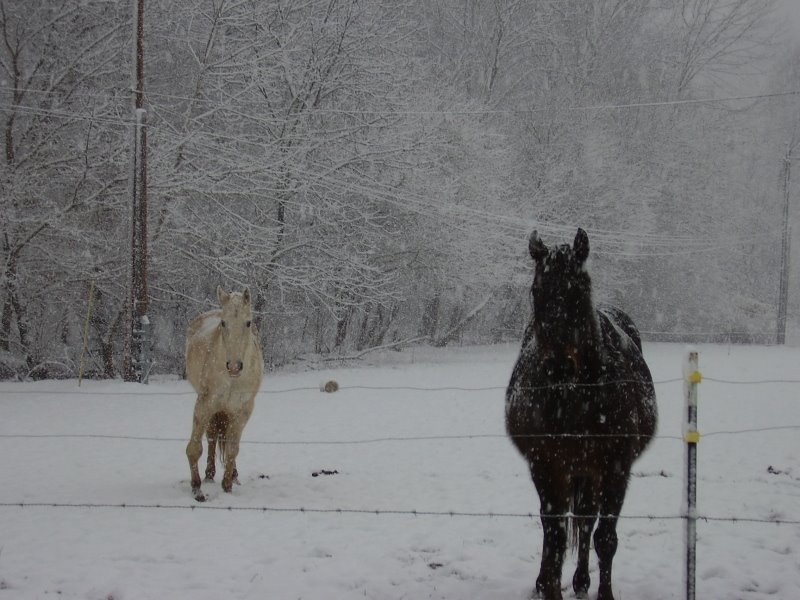
Stopping By Woods On A Snowy Evening

Whose woods these are I think I know.
His house is in the village though;
He will not see me stopping here
To watch his woods fill up with snow.
My little horse must think it queer
To stop without a farmhouse near

Robert Frost --- Stopping By Woods On A Snowy Evening

Photobucket - Video and Image Hosting

Thursday, December 23, 2010

Have You ever Wondered Who the Magi Were

that visited the Christ child in Bethlehem so many years ago? First we need to deal with some misconceptions regarding these men. They were not “kings”; There were almost certainly more than three Magi that made the journey; We have absolutely no idea of their names in spite of some inaccurate traditions which appeared in 6th century, and they would not have ridden camels.

History tells us they belonged to a hereditary order of Medeian priests who over the centuries became powerful political and priestly advisers to the kings of the ancient middle eastern world. Some historians have traced them back to the time and location of Abraham in Ur of the Chaldees. The Magi were to became well known as “king makers.” In the days of Nebuchadnezzar the godly Jewish captive Daniel was made the “chief of all his wise men” (Daniel 4:48) which included the Magi.

Based on Daniels character it is very possible that a number of Babylon’s wise men became believers in Jehovah the God of Israel. The Magi were highly educated and studious men. Over the 600 years between Nebuchadnezzar's reign and the birth of Christ they most likely had continued access to the ancient Jewish scriptures (Old Testament) that originally belonged to Daniel. These writings included the “kingly” prophecies of a Messiah which are recorded in Micah 7:8-20.

Let’s now paint a picture of the Magi, who entered Herod’s Jerusalem. Fitting their political position they would have arrived in the city riding black Arabian stallions bred for speed and endurance. They would have been escorted by a large number of soldiers for protection on their journey and to deal with any potential conflict with Roman soldiers on their arrival in Israel. History tells us that at this time many of Herod’s army were in fact out of the country.

Finally, Herod would have been well aware of their reputation as advisors and “king makers.” Their arrival in the city and the questions they asked about a baby king certainly warranted the city being “deeply disturbed” (Mat 2:3). On leaving Jerusalem they followed the Shekinah glory to the house where the Christ child now lived.

Jesus’ whole life was a series of disturbances, Herod’s was just the first. Jesus was a thorn in the side to the chief priests, the Pharisees, the Sadducees, the self-sufficient, those who conducted business in the temple, and Pilate.

Today he continues, through the message of the gospel, to “disturb” those who are in need of his message of spiritual regeneration. However, may the disturbing work of Christ be replaced by the peace that comes hand in hand with the miracle of spiritual renewal through the power of salvation that is in Jesus alone.

“For God loved the world so much that he gave his one and only Son, so that everyone who believes in him will not perish but have eternal life (John 3:16).

Copyright. Bruce December 2010
Note: All quotes taken from the New Living Translation Second Edition.

Photobucket - Video and Image Hosting

Friday, November 19, 2010

Going For Water

Each laid on other a staying hand
To listen ere we dared to look,
And in the hush we joined to make
We heard, we knew we heard the brook.
Robert Frost --- Going For Water

Photobucket - Video and Image Hosting

Friday, November 12, 2010

There Is A Time in Eternity Past

that is completely shrouded in mystery. Its much further back than our finite minds have the ability to imagine. It is eternity past when only God the Father, Son, and Holy Spirit existed. It was eternity before creation.

The Genesis account commences with the comment that in the beginning God created the heavens and the earth (Gen 1:1). In the beginning of what may we ask? It is certainly not referring to time as this scale of measurement had yet to be created. Quite simply it refers to the point in eternity when God began his creative process.

It must have been quite an experience to witness the creative power of God being brought into action. The sights --- the flaming fire, the sounds --- incredible noise, the real BIG BANG the one controlled by the God of the universe as opposed to some evolutionary accident of fate.

We have no way of knowing how much "time" was used by God to accomplish his work of creation. The Bible talks about six days. Many contend that these are literal 24 hour days. However, one could argue that God was communicating the immense time length of creation using everyday terms/concepts that the original ancient targeted audience could appreciate. This would be similar to describing God who is a Spirit as having eyes, ears (Psa. 34:15) hands and arms (Psa 98:1).

Those who hold to the position of an Old Universe and Earth accept a totally defendable alternate translation of the Hebrew word commonly translated “day”, that being, "an age of time". They believe this is the context in which creation should be understood. Those who hold this position do not support evolution. This is a biblical position built on the teachings of Genesis that proclaims that God created all animal and plant life with the capability to only reproduce after its own kind (see Gen. Chapters. 1 & 2).

The Bible reveals that the first three "ages/days" were grounded in eternity. Time had not yet been instituted. Therefore, the phrasing "evening passed and morning came" indicates the completion of a specific element or segment of God's creation.

Time broke into eternity on age/day four when God commanded, “Let great lights appear in the sky to separate the day from the night. Let them mark off the seasons, days, and years ( Ge 1:14). Does this verse indicate that we have now entered the 24 hour day of creation? Not necessarily so!
Consider for a moment age/day six. By this point God has created animal life and man is now upon the face of the earth. The Lord gives Adam the awesome task of choosing specific names for "all the livestock, all the birds of the sky, and all the wild animals" (Gen 2:19).

How many animals would be included in this group? Creationist Dr Henry Morris suggests the number 3,000 (many would suggest a much higher number). Based on this number if Adam worked 24 hours solid he would have to name 125 animals an hour to get the job done in one day. This would not allow Adam any time to observe the animal its characteristics and interact with the Lord before giving it an appropriate name. This could not be a literal 24 hour day. Age/day six must have consisted of a number of 24 hour days.

How long were the ages/days of creation? Only God knows. The Bible's purpose is not to describe the process of creation but to clearly proclaim that God was the creator and that the angels shouted for joy at the laying of its cornerstone! (Job 38:4-7). Finally, what part of the Godhead was responsible for the actual act of creation --- it was the second person of the Trinity --- Jesus Christ (John 3:1-3).

Copyright. Bruce November 2010
Note: All quotes taken from the New Living Translation Second Edition.


Photobucket - Video and Image Hosting

Friday, November 05, 2010

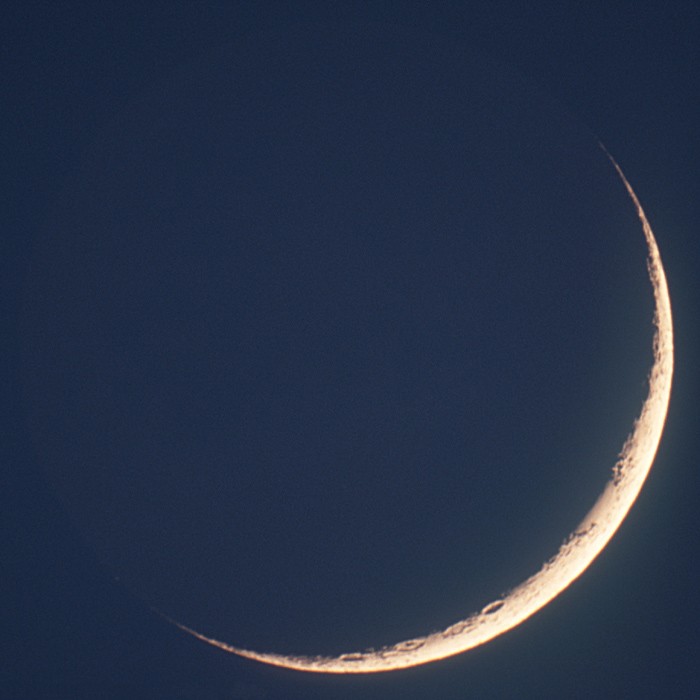
The Freedom of The Moon

I've tried the new moon tilted in the air
Above a hazy tree-and-farmhouse cluster
As you might try a jewel in your hair.
I've tried it fine with little breadth of luster,
Alone, or in one ornament combining
With one first-water start almost shining.

Robert Frost --- The Freedom of The Moon

Photobucket - Video and Image Hosting

Monday, November 01, 2010

The Hour Is Now Late, Mourners


stand by grieving parents. The devastated husband and wife take a somber moment to look west towards Eden. For a fleeting moment they remember the perfection of earlier days. Sin had brought that life to an end. Now their grief has been intensified. The sanctity of life had been broken. Abel lies dead. How did he die? He was violently murdered by a jealous brother (Gen 4:8).

For Cain the result of his action was separation from family and God (Gen 4:14). God condemned him to a life of nomadic wanderings on an earth that would not yield him produce (Gen. 4:12). Belatedly he fears that someone will seek revenge and kill him. Remarkably, God indicates his willingness to protect his life. He puts "a mark on Cain to warn anyone who might try to kill him" (Gen 4:15) of the “sevenfold punishment” accompanying such an action.

There was to be one further act of divine judgment. At the end of this face to face interview, the Bible records: "So Cain left the presence of the Lord” (the pre-incarnate Christ: Gen 4:16). The implication of this statement is clear. His vile actions had irrevocably broken his relationship with the Lord.

Why would God protect the life of Cain as opposed to passing a death sentence upon him? Certainly, it was not because he or his offspring would begin to seek after godliness. Five generations later Cain's decedent Lamech boasts belligerently to his wives about killing a man.

In this event we witness an act of “divine prerogative” and possibly enter the realm of “progressive revelation”. Divine prerogative quite simply means that God can do whatever he wants whenever he desires to do so because there is no higher authority than himself. Thankfully he is consistent in his nature while occasionally exercising divine compassion.

Progressive revelation is the process whereby God gradually revealed his nature to humanity. In the Old Testament he did this through giving himself a variety of names which described his person. Later the laws given to Moses told us more of God’s nature and expectations including those related to murder. Finally and most dramatically he declared his nature by sending his son to walk among humanity.

Beyond “divine prerogative” it would be foolish for us to think we could determine God’s reasoning related to Cain. However, if “progressive revelation” was also a part of the mix God would have weighed his divine judgement at least in some measure upon how much of his nature had been unfolded to humanity at the time in question.

We now come to the present day. God's revelation to humanity is complete. This then begs the question: How aware are we of the nature, person, demands and requirements of our Heavenly Father? If it is true that Cain was judged based on his understanding of the revealed person of God it is sobering to think of our level of responsibility before a holy and true God.

Copyright. Bruce November 2010

Note: All quotes taken from the New Living Translation Second Edition.

Photobucket - Video and Image Hosting

Saturday, October 23, 2010

Gathering Leaves

Spades take up leaves
No better than spoons,
And bags full of leaves
Are light as balloons.

Robert Frost: Gathering Leaves

Photobucket - Video and Image Hosting

Saturday, October 16, 2010

It is Not Surprising to Realize That God’s Glory

has or will impact every aspect of the created order. Scripture states that the entire earth is filled with his glory (Isa 6:3). Everywhere we see God’s glorious divine nature in creation (Rom. 1:20). Astronomy with its mighty telescopes show us the incredible interstellar glory of the Lord. The microscope shows us with precision the intricacies of his glory.

Yet God’s person is more glorious than creation. Even though the heavens proclaim the Lord’s glory (Psa. 19:1) a time is coming when there will no longer be a need for the sun or moon because the Lord’s glory will become the everlasting light (Isa. 24:23, 60:19). That which proclaimed the glory of God must ultimately secede to the One who is all glorious.

However, not only does God radiate glory he also has ordained that he is to receive glory. First, the Father receives glory because of the Son (John 13:32). For example in the raising of Lazarus from the dead both the Father and Son received glory (John 11:4). Secondly, Israel and Judah were created as a people who would bring glory to God (Jer. 13:11). Unfortunately, their history is primarily of rejecting the Lord. However, for those Jews who have believed in Christ these have brought Him glory (Eph. 1:2).

Thirdly, God receives glory when believers accept fellow Christians in the same way that Jesus has individually accepted us (Rom. 15:7). This is not always easy as not every believers personality meshes with ours. The result is we often have difficulty expressing acceptance. There is only one way that Godly harmony can be achieved in such relationships that is by allowing Christ to develop a righteousness of character within us. Such a process of growth and development brings glory to God (Phil 1:11). From the Lords perspective our character needs to modelled after the example set by Jesus. This becomes a direct measuring rod of our personal commitment to him. As one becomes more mature in Christ they will increasingly desire to do all things in life for the glory of God (1 Cor. 10:31).

There is a least one other way the Lord sometimes chooses to receives glory. It is in rescuing and preserving the life of his follower. David regularly found himself in tight spots. His enemies were often closing in on him. On one such occasion the psalmist cries out to God for protection (Psa. 143:11).

Those who obey Jehovah have been created by God for the glory of his name (Isa. 43:7, Rom. 1:5). However, we need to realize that the believer was not only created for the Lord’s glory. There is a flip side — according to Paul we are also to share his glory (Rom. 5:2, 2 Thess. 2:14). This promise comes with a price. The Apostle states “if we are to share his glory, we must also share his suffering” (Rom 8:17). The thought of suffering appeals to few. The Apostle’s perspective is that he was willing to suffer during his earthly journey because of the heavenly reward that awaited him (Rom. 8:18).

What is the “glory quotient” of your life? Are you seeking to bring glory to God in the way you live? Are you willing to experience suffering as unpleasant at it may be? Although it is not always pleasant bringing glory to the Lord should be our ultimate desire. May God give us the perseverance to finish the course!

Copyright. Bruce October 2010

Note: All quotes taken from the New Living Translation Second Edition.

Photobucket - Video and Image Hosting

Saturday, October 09, 2010

The Kitchen Chimney

"However far you must go for bricks,
Whatever they cost a-piece or a pound,
Buy me enough for a full-length chimney,
And build the chimney clear from the ground

Robert Frost --- The Kitchen Chimney

Photobucket - Video and Image Hosting

Saturday, October 02, 2010

The Glory of God Has Only

been revealed occasionally in scripture. Fallen humanity is not capable of looking upon the radiance of God’s person. As with God’s holiness his glory is a frightening thing that we often take far too casually.

The Israelites had the opportunity to experience something of the glory of God while they were on their wilderness travels. One time, when the people had been grumbling against God, the Lord revealed his incredible glory to them in a cloud (Ex. 16:10). On another occasion when they were camped by Mount Sinai he appeared like a consuming fire at the summit of the mountain (Ex. 24:17).

Being physically in the presence of the Lord causes one to reflect the brilliance of God’s glory. On Mount Sinai Moses was given the Ten Commandments. When he returned from his time in the Lord’s presence his face reflected the radiance of the glory of God (Ex. 34:29) to such an extent that “they (Aaron and the people) were afraid to come near him” (Ex. 34:30).

When confronted by the glory of God the ancient Israelites did not expect to live. After having a first hand encounter with God’s glory their reaction to having witnessed his greatness and hearing his voice was amazement that they were still alive (Deut 5:24).

So how does the Bible describe the glory of God. First, it is expressed by the psalmist as being higher than the heavens (Ps. 8:1). As our understanding of the heavenly expanses increase we are confronted with a virtually unmeasurable quantity of glory. Secondly, he goes on to describe God’s glory in relation to his voice of thunder (Psa 29:3). We cannot begin to fathom the volume of such a majestic voice that is capable of bringing such fear to the hearts of men and women that they seek to flee from him (Is. 33:3). This is the glorious voice of God almighty. Thirdly, divine glory is mentioned in connection with the Lord’s majesty (Isa. 2:10). His kingly bearing is of such a stature that even the greatest earthly monarchs will have to acknowledge that he has the supreme privilege to rule bearing the title “King of all kings and Lord of all lords” (Rev. 19:16).

Has Israel always experienced the glory of such a supreme God? Unfortunately the answer is no. During the days of Ezekiel the nation had wandered far from the Lord. The prophet, although not in Jerusalem at the time, was given a vision of the departing glory of God. This event is described in stages. First, his glory rose up from above the cherubim and went over to the door of the temple. Then it proceeded to the east gate of the Temple. Finally, the glory of God left the city and hovered over a mountain to the east. So sadly God’s glory left Israel (see Ezek 10 & 11). It has not returned except for a brief moment when Jesus was radiantly transfigured in the presence of Peter, James, and John (Luke 9:28-36).

We cannot begin to comprehend God’s glory. Ezekiel tried and has come closer than anyone. In describing his vision of the Lord he states that from "his waist up, he looked like gleaming amber, flickering like a fire. And from his waist down, he looked like a burning flame, shining with splendor. All around him was a glowing halo, like a rainbow shining in the clouds on a rainy day. This is what the glory of the Lord looked like to me” (Ezek. 1:27-28).

Copyright. Bruce October 2010

Note: All quotes taken from the New Living Translation Second Edition.

Photobucket - Video and Image Hosting

Friday, September 24, 2010

Now Close the Windows

Now close the windows and hush all the fields:
If the trees must, let them silently toss;
No bird is singing now, and if there is,
Be it my loss.

Robert Frost --- Now Close the Windows

Photobucket - Video and Image Hosting

Friday, September 17, 2010

Who Was Actually Responsible For Jesus Death

is a question that has garnered varying answers. Some have suggested that the religious leaders of Israel should be fingered.  

Jesus was certainly not popular with the Jewish religious establishment. He had driven from the Temple all those who were selling animals as well as those engaged in changing regular currency into the Temple exchange. This action had disrupted a major source of income for the priests and the temple. As a result the Jewish leaders were looking for a way to kill him (Mark 11:18).

Secondly, the religious leaders had introduced numerous laws governing behaviour on the Sabbath. Jesus did not allow himself to be bound by such man-made rules. One Sabbath he healed a man with a withered hand (Mat 12:14) and on another a lame man (John 5:9). As a result the Pharisees wanted to kill him. Thirdly, and the real clincher, was when Jesus claimed to be the Son of God. Not unexpectedly they "tried all the harder to find a way to kill him" (John 5:18).
Others have suggested that it was the Romans and specifically Pilate who should bear responsibility. Pilate was a political creature who realized his position of leadership was not secure. He was seeking to govern a part of the Roman Empire that was a constant breeding ground for tension and acts of insurrection.

When the Jewish leaders brought Jesus before Pilate it became evident that Christ had done nothing wrong (Luke 23:4). The Governor was perceptive enough to realize that "the religious leaders had arrested Jesus out of envy" (Mat. 27:18). His own wife strengthened the conviction, that Jesus was innocent, when she described her terrible nightmare concerning the prisoner (Mat 27:19).

Pilate wanted to release Christ but he lost his nerve when mob mentality took over. In unison the crowd chanted "If you release this man, you are no 'friend of Caesar'" (John 19:12). The Governor decided that he could not risk a riot or being branded a traitor to the Roman Empire. Therefore, he grudgingly turned Jesus over for crucifixion (Mat. 27:24-26).

So who was responsible for putting Christ to death? Was it the jealous Jewish leaders or the timid Roman Governor. The truth of the matter is that neither of them were ultimately responsible! They were but tools in the hands of the Master Planner. It was God the Father himself who put Jesus to death!

The Lord hinted at this truth when standing before Pilate. The Governor had told Jesus that he had the authority, under Rome, to release him. Jesus response was "You would have no power over me at all unless it were given to you from above" (John 19:11). The Apostle Peter develops this line of thought more thoroughly by stating that God chose Jesus to be our ransom long before the world began (1 Pet. 1:19-20).

How incredible! To think that somewhere in deepest eternity past God ordained that Jesus, that is God the Son, would die to redeem those whom the Father would call to himself. So when did the Father determine whom he would call? Paul answers this for us — it also took place before the world came into existence (Eph. 1:4-5). What incredible and profound insights into the nature and character of God the Father — who can ever know the mind of God!

Copyright. Bruce September 2010
Note: All quotes taken from the New Living Translation Second Edition

Photobucket - Video and Image Hosting

Wednesday, December 31, 2008

An Old Man's Winter Night

All out of doors looked darkly in at him
Through the thin frost, almost in separate stars,
That gathers on the pane in empty rooms.
What kept his eyes from giving back the gaze
Was the lamp tilted near them in his hand.

Robert Frost --- An Old Man's Winter Night

Photobucket - Video and Image Hosting

Monday, December 29, 2008

In Considering The Characteristics of God

would your list include that of FIRE? Probably not! However, it could be argued that FIRE is central to God’s manifested nature. In the Scriptures the Lord is often mentioned in tandem with FIRE.

God initially introduced himself to Moses by appearing "to him in a blazing FIRE from the middle of a bush" (Ex. 3:2). Later when the Egyptians were pursuing Israel the Lord "looked down on the Egyptian army from the pillar of FIRE and cloud, and he threw their forces into total confusion" (Ex 14:24).

Throughout Israel's years of wandering in the wilderness God revealed himself through FIRE. At Mount Sinai the Lord descended upon the mountain in FIRE along with smoke and an earthquake (see Ex 19:18). Moses describes God's glory as appearing "like a consuming FIRE" (Ex 24:17) and his jealousy as "a devouring FIRE" (Deu 4:24). We are reminded to worship the Lord in holy fear and awe because "our God is a devouring FIRE" (Heb 12:29).

Let’s consider the Bible’s physical description of the Lord. Ezekiel depicts his appearance as follows "From what appeared to be his waist up, he looked like gleaming amber, flickering like a FIRE" (Ezk 1:27). John describes Jesus as having eyes that"are like flames of FIRE" (Rev 2:18).

The Lord's court is one of FIRE. Ezekiel describes God's holy mountain as being "stones of FIRE" (Ezk 28:14). In a vision Daniel saw the Ancient One sitting on "a FIERY throne with wheels of blazing FIRE" from which came "a river of FIRE"(Daniel 7:9-10). In the vision John received from the Lord he saw "what seemed to be a glass sea mixed with FIRE" (Rev 15:2). Finally, the living beings who attend the Almighty are described as " bright coals of FIRE" (Ezk 1:13). In fact, all the angels of God are described as being "servants like flames of FIRE” (Heb 1:7). Their face’s are like the sun, and feet like pillars of FIRE" (Rev. 10:1). God has a standing army of horses and chariots of FIRE” (2 Kings 6:17). It must have been one of these chariots that took Elijah up to heaven (2 Kings 2:11).

The Holy Spirit is also described in terms of FIRE. At Pentecost God sent the Spirit to fill and give spiritual gifts to those believers who were gathered in an upper room. In this anointing the Spirit appeared "like flames or tongues of FIRE” (Acts 2:3).

In the future FIRE will be prominent. At the "Judgment Seat of Christ" he will use a purging FIRE to "reveal what kind of work” (1 Cor 3:13) believers have done during their earthly pilgrimage. At the "Great White Throne" judgment unbelievers will experience the blazing FIRE of Christ's anger when He condemns them to the lake of FIRE (Rev 20:15) a place where "the FIRE never goes out" (Mark 9:48).

Not only is humanity going to experience God's "FIRE" but the heavens and earth will also be destroyed by FIRE right down to their most basic elements after which the Lord will put in place a new heavens and earth (see 2 Peter 3:12,13).

FIRE and God are inseparable. FIRE has the power to destroy or it has the power to refine and make pure. The pertinent question we must all consider becomes: how will the FIRE of God touch us?

Note: All quotes taken from the New Living Translation Second Edition

Copyright. Bruce December 2008

Note: All quotes taken from the New Living Translation Second Edition.

Photobucket - Video and Image Hosting

Photobucket - Video and Image Hosting